

Blog
How to Avoid a Flat Tyre on a Motorcycle — and What to Do if It Happens
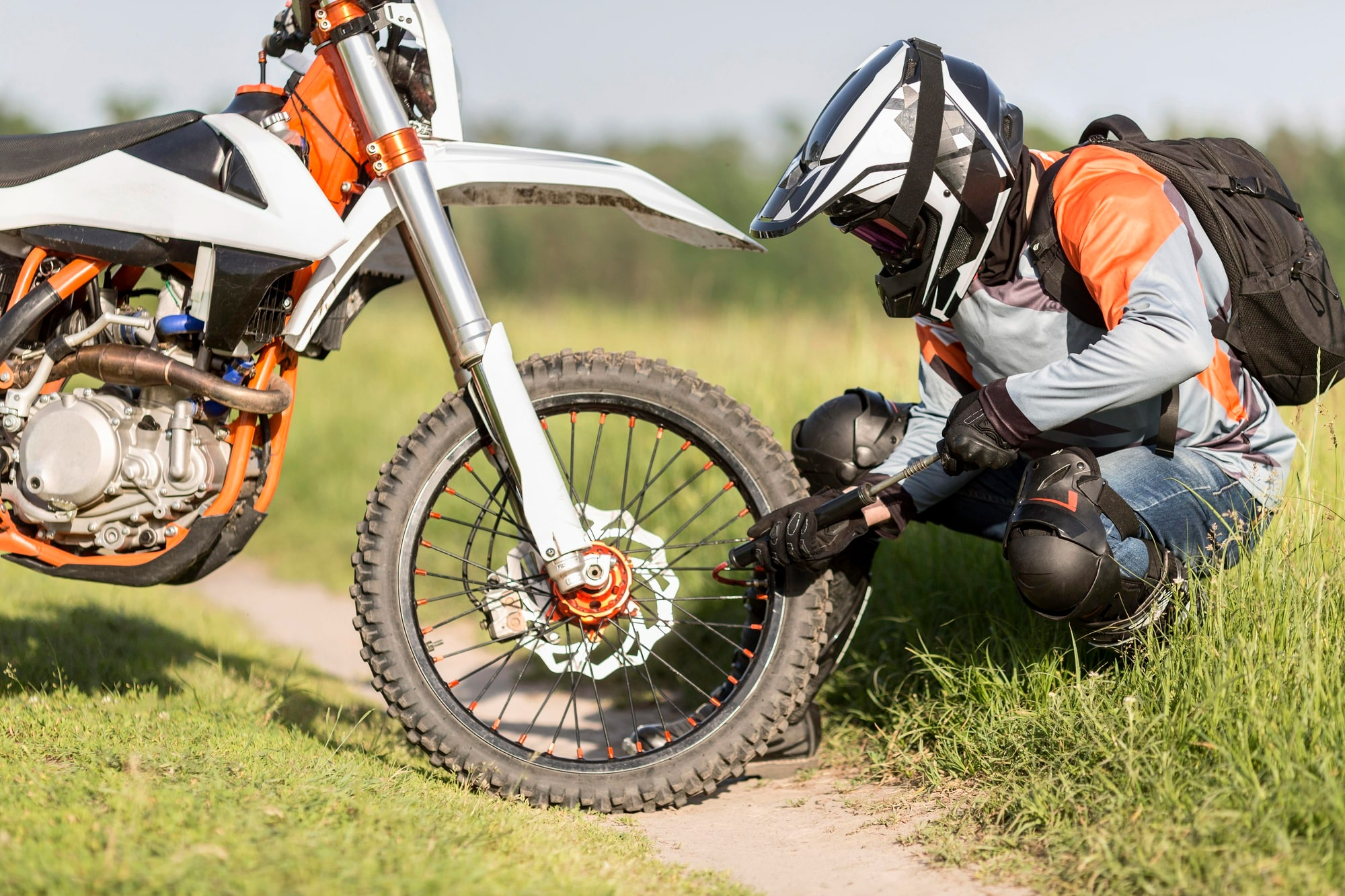
Why a puncture is more dangerous than it seems
A flat tyre isn’t just a small inconvenience — especially when you’re riding a motorcycle.
At speed, it can cause loss of control, crashes, or damage to the rim. And if it happens far from civilisation, things get even more complicated.
That’s why it’s so important to know how to avoid a motorcycle tyre puncture and what to do if one catches you by surprise.
5 Ways to Reduce the Risk of a Flat Tyre
1. Check your tyre pressure regularly
Incorrect pressure — whether too low or too high — can:
- increase contact area and friction;
- make it easier to get cut by glass, nails, or sharp gravel;
- overheat the tyre.
Use a pressure gauge at least once a week — or before any long ride.
2. Avoid shoulders, construction zones, and debris patches
Most punctures happen:
- on the roadside;
- near building sites;
- after storms or heavy traffic.
Watch out for:
- screws
- broken glass
- thin metal pieces
- wire scraps
If a section of road looks risky — better to go around than test your luck.
3. Don’t ride on worn-out tyres
Bald tyres:
- offer less protection from sharp objects;
- often develop small cracks;
- have poor grip on wet roads.
Replace them before the tread is gone — not after.
4. Inspect your tyres visually — not just at the start of the season
Even if the pressure seems fine, there could be:
- stuck pieces of glass
- sidewall cracks
- bulges from internal separation
A 60-second monthly inspection can prevent a lot of trouble.
5. Pay attention to vibration or changes in handling
If you suddenly feel:
- new vibration
- wobble
- lateral drift…
…it could mean:
- imbalance
- slow puncture
- internal damage to the tyre
Better to stop and check now than walk 10 km pushing your bike.
What to Do If You’ve Got a Puncture
1. Pull over safely
- Avoid hard braking, especially with the front brake
- If possible, move to solid ground off the road
2. Assess the damage
- If the tyre still holds some air — you may be able to repair it
- If it’s completely flat — you’ll need a compressor or assistance
3. Use a repair kit
A tubeless tyre kit usually includes:
- rasp tool to clean/expand the hole
- rubber glue
- plug (string or mushroom type)
- small blade
Takes about 5–10 minutes with a bit of practice.
4. Reinflate the tyre
- Use a compressor powered by your bike battery or a power bank
- Or a CO₂ cartridge — but hold the valve carefully (they get very cold)
Monitor pressure — overinflating can be just as dangerous.
5. Call for help if needed
- Save a local motorcycle recovery contact in your phone
- Always have a charged power bank, just in case
Essential Gear to Always Carry
| Item | Why You Need It |
|---|---|
| Tyre repair kit | Fix punctures on the go |
| Portable compressor | Reinflates tyre after repair |
| Head torch | For working in low light |
| Mechanic gloves | Protect your hands during repairs |
| Power bank | Powers your phone or compressor |
Recommended Products from Motomo.com.ua
- Oxford Tubeless Tyre Repair Kit
- 12V Digital Compressor
- IPX4 Ledlenser Head Torch
- Heavy-duty Mechanic Gloves
- Ready-to-go Travel Tool Kits
Browse the full range → Motomoshop.com
Final Thoughts — It’s Better to Be Prepared Than Stranded
A flat tyre can happen even with brand-new rubber.
But with basic gear and a bit of knowledge, it becomes a minor inconvenience — not a disaster.
Be smart:
- check your tyres
- carry a compact repair kit
- keep your tools in one pouch, ready at any time
Because every kilometre of road feels better when you’re riding with confidence.
Safe travels — and may your wheels stay full and steady.